

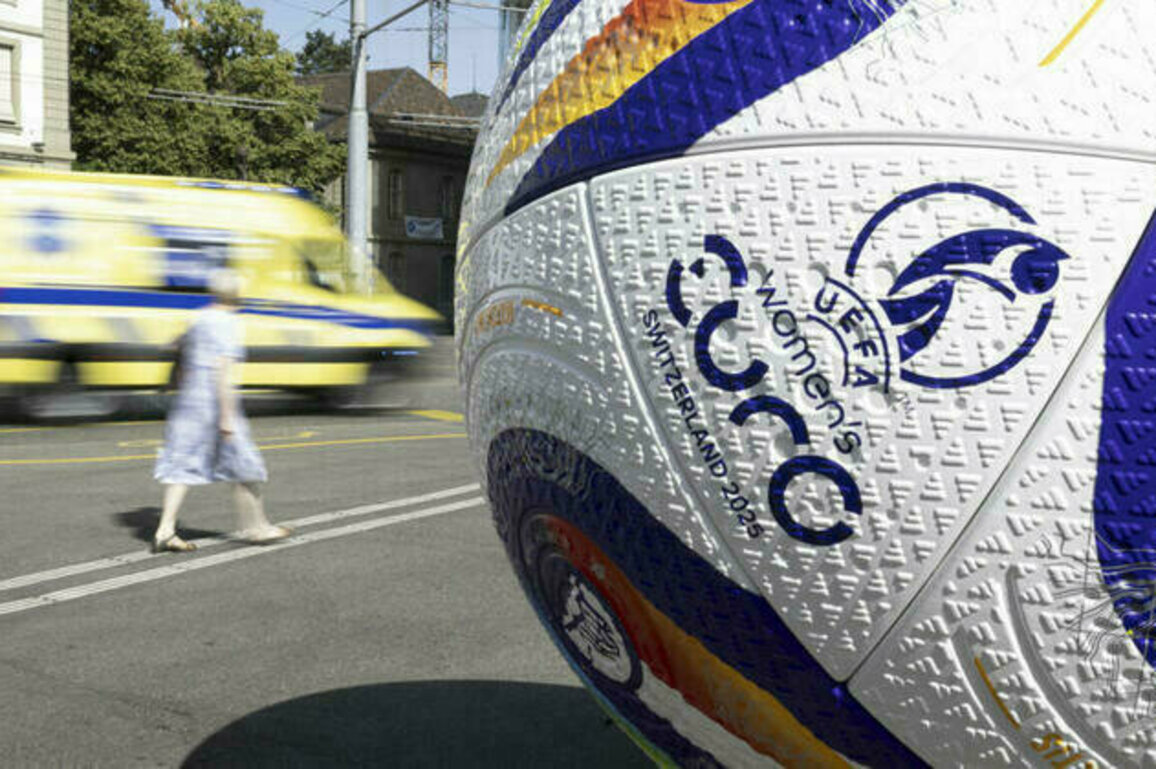
Womens soccer has seen a surge in popularity in recent years, driven by increased investment at both the international and club levels. While only 1,000 fans attended the first womens euros in 1984, over half a million tickets have been sold for this years tournament in Switzerland, with 2022s attendance record widely expected to be broken.
Around 1,000 fans were on hand whenEnglandplayed one of the very first matches of the inaugural Womens European Championship in 1984.
How things have changed.
More than half a million tickets have already been sold for the 31 matches of this year's edition of the tournament, which kicks off next week inSwitzerland.
Organisers expect to break the attendance record of 575,000 set at the previouswomen's euros in England in2022 when 87,000 people packed into Wembley Stadium for the final.
The popularity of womens soccer inEuropeand around the world has accelerated in leaps and bounds in recent years. Players are becoming stronger, faster and more technically skilled, making the game more entertaining to watch.
While it hasnt yet closed the gap with mens soccer in revenue, the womens game is seeing rapid growth in investment at both the international and club level. Players who started their careers over a decade ago say the pace of change has been stunning.
If you look at a match from five years ago, it has nothing to do with the ones being played now, said Barcelonas two-time Ballon dOr winner Alexia Putellas, who made her senior debut in 2010.
Read moreFrance's Benzema and Spain's Putellas win 2022 Ballon d'Or awards
The 31-year-oldSpainmidfielder told The Associated Press that her generation and earlier generations never thought they would be able to make a living from playing soccer when they grew up.
For sure its about making our sport a little more visible, so that girls can dream of being soccer players," she said. I think that in recent years there has been a very good evolution. In the end, we just needed people to invest in us, to help us improve, and I think that change is happening."
Governing bodies have set up initiatives to drive the game forward, such as European soccer body UEFAs Unstoppable strategy aimed at makingfootballthe most-played teamsportforwomenand girls in every European country by 2030, while increasing the number of professional leagues across the continent.
A major shift has happened at the club level, as Europe's powerhouse clubs such asBarcelona,Real Madridand Chelsea started taking womens soccer seriously.
More womens leagues across Europe have turned professional over the past decade, inspiring a new generation of female soccer players.
In the last decade real progress happened, especially on the club side. You see real professionalization,NorwayFA president Lise Klaveness told AP. It is very important to have a full pyramid that girls can see that they can have this as a job.
She said the real DNA in soccer is the connection with local clubs.
We havent really had that with women. Now you see it more and more, she said.
She added that many top leaders on the men's side show real ambitions to raise their women's teams.
If you meet theArsenalpresident or (Joan) Laporta at Barcelona he feels very close to his womens team. When the womens team plays, he is there, Klaveness said.
As the club game has gotten bigger Englands top womens league is expanding so have the international competitions.
At Euro 1984, there were just four teams in the inaugural tournament: England,Italy,SwedenandDenmark.
It wasnt until 1997 that it was expanded to eight teams, becoming 12 in 2009 and increased to the current format of 16 from the 2017 edition.
At Euro 2009 there was an average attendance of just over 5,000 at the matches in England. In the same country in 2022, the average was 18,544.
And just as attendance levels have soared, so have television viewing figures.
Read moreBrazil chosen to host 2027 Women's World Cup as Gaza war overshadows FIFA congress
Euro 2022 had a global cumulative live viewership of 365 million across TV, out-of-home viewing and streaming. That was more than double the number of live viewers compared to the 2017 edition (178 million) and 214% more live viewers than in 2013 (116 million).
The rise in attendances is also evident in club soccer as women start playing in stadiums with bigger capacities and clubs start to invest more in their womens teams. A couple of Barcelona's Women'sChampions Leaguematches in 2022 drew more than 90,000 fans.
A major change that's happened in recent years is investors are now looking at women's soccer as something you can make money off, said Seattle Reign coach Laura Harvey, who coached Arsenal and Birmingham City in her native England before moving to the US.
For those of us whove been in this a long time I was Birmingham Citys head coach in 2006 and to think where the games evolved in 19 years or whatever its been, its just wild, she told AP. Im glad that I can be part of it.
The continued growth in popularity of womens soccer has the knock-on effect of more sponsorship, more prize money and more to invest in grassroots soccer and clubs.
In 2017,UEFAmade what was perceived as a bold move: unbundling sponsorship rights for its womens competitions and selling the commercial rights separately from the mens.
That was done with the express purpose of accelerating the growth of womens football competitions and was considered a success.
So much so thatFIFAhas followed suit, as have governing bodies of other sports.
UEFA now counts 11 dedicated womens soccer partners among its wider portfolio, including Visa, Amazon and Adidas.
There are more than 20 sponsors for Euro 2025 and that revenue is projected to increase by 145% compared to 2022, according to UEFA.
Read moreChelsea beat Real Betis to win UEFA Conference League final
The impact of Womens Euro 2025 extends far beyond the competition itself, UEFA President Aleksander Ceferin said in a report last month. With record prize money and unprecedented interest from sponsors, the tournament will bring more investment into the womens game than ever before.
The prize pot at Euro 2025 has been set at 41 million ($47 million), more than double the 16 million ($18.3 million) received by national associations in 2022.
Moreover, players will receive a guaranteed share from their national associations for the first time.
The mensEuro 2024had a total prize fund of 331 million ($347 million), with each of the 24 teams receiving a minimum of 9.25 million and champion Spain earning 28.25 million.
UEFAs aim is that Euro 2025 will act as a catalyst for further progress in the women's professional game in Switzerland and across Europe.
However, Klaveness has a warning: that the richest leagues shouldn't financially separate themselves completely from the currently semi-pro ones.
Now I think the next step thats really important to go further now is not to let the head move away from the body, then we would do the same as the mens side, she said.
(FRANCE 24 with AP)
Originally published on France24