

Joseph Black
Download PDF
Jun 15 2025
1
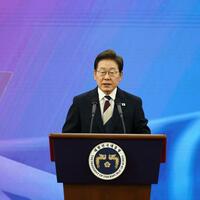
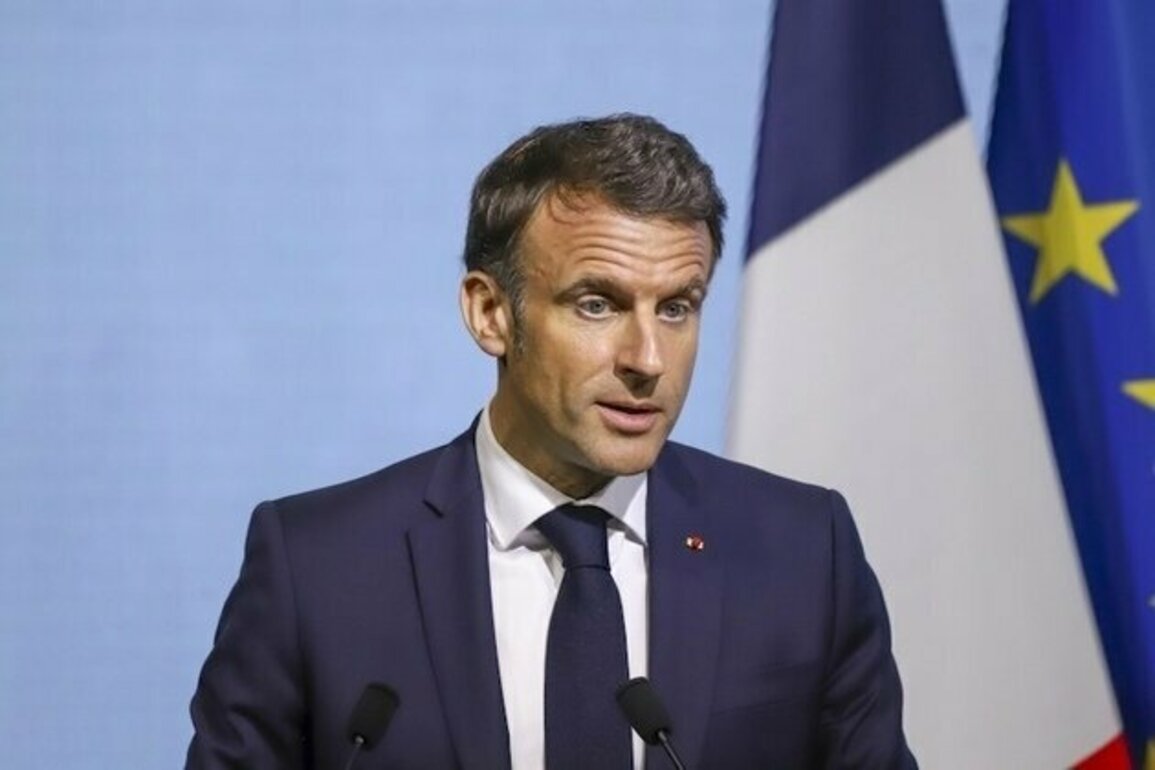
viewsthenews2.com/DepositphotosOn 30 May 2025, French President Emmanuel Macron delivereda speech at the Shangri-La Dialogue in SingaporeAsias premier security summit and his comments were unusually blunt. He warned that the West Europe and the US risk losing credibility over the wars in Ukraine and Gaza, and unless these conflicts are resolved with integrity and consistency, the broader rules-based international order and Europes place in it will unravel. Macrons concern wasnt just about the tactical consequences of geopolitical instability, but something deeper: the symbolic and normative weight Europe claims to carry in global affairs. His comments mark a turning point, one that exposes the crisis of coherence at the heart of the European Unions foreign policy and the growing tension between the EUs aspirational identity as a normative power and the harsh realities of a world governed by realpolitik.
For over two decades, the EU has presented itself as a values-based actor, using diplomacy, development aid, legal harmonisation and multilateralism rather than coercion to wield influence. The concept of the EU as a normative power famously coined by Ian Manners is based on the idea that Europe seeks to shape global affairs by promoting norms such as human rights, democracy and international law. But the simultaneous occurrence of two deeply symbolic and contested wars Russias invasion of Ukraine and Israels bombardment of Gaza makes it increasingly hard for the EU to maintain this self-image without being accused of hypocrisy and selective morality.
Nowhere is this more obvious than in the gap between Europes response to Ukraine and Gaza. In Ukraine, the EU has mounted one of the largest and most united responses in its history: military aid, sanctions, diplomatic isolation of Russia and open arms for Ukrainian refugees. In Gaza, the response has been fragmented, inconsistent and by many accounts morally ambiguous. Some European states like Ireland and Spain have called for recognition of Palestinian statehood and condemned Israeli actions, others have hesitated or doubled down on support for Israel in the name of counterterrorism and alliance politics. This has not gone unnoticed in the Global South, where Europes normative claims are increasingly seen as hollow, if not ridiculous.
Macrons talk of credibility reflects an elite awareness that Europes legitimacy is no longer taken for granted outside its borders. The credibility crisis he describes is not just about diplomacy its about identity. If the EU says territorial integrity is sacred in Ukraine, how can it do nothing when the same principles are being flouted elsewhere? If the Union says human rights are universal, can it be silent or ambiguous on the civilian casualties in Gaza? These are not questions asked by foreign policy analysts; they are asked in international forums, in Asian capitals courted by Brussels and in the protests that fill European streets. The more the EU fails to match its words with its actions, the more its normative brand erodes.
But theres another layer to Macrons intervention that needs to be looked at. His comments on strategic autonomy and not being caught in the crossfire of the US-China rivalry suggest Europe is dealing with more than just a credibility crisis. Its facing a strategic choice that will redefine its global role: whether to double down on the postwar transatlantic compact or to chart a more independent course that allows it to mediate between blocs in a multipolar world. Macrons consistent advocacy of strategic autonomy (however controversial) means he recognises the EU cant outsource its geopolitical relevance to Washington indefinitely, especially with the return of Donald Trump to the White House.
This dilemma is made worse by the structural weaknesses within the EU itself. The Unions foreign policy is crippled by institutional fragmentation, national interests and a consensus-based decision-making process that often leads to lowest-common-denominator positions. While the EU was impressive in its initial unity on Ukraine, the Gaza crisis has shown the limits of that unity when values collide with political alliances or domestic political considerations. This is not just a crisis of perception but of capacity. Can the EU actually be a geopolitical player when its member states cant even agree on what is legitimate force, occupation or humanitarian necessity?
The illusion of normative power, then, is not just an external branding problem it is an internal governance challenge. For Europe to maintain credibility abroad, it must first reconcile its internal contradictions. That means rethinking the balance between values and interests, between ideals and strategic imperatives. It may also require a degree of institutional boldness: deeper integration in foreign and security policy, a greater role for the High Representative, or a shift toward qualified majority voting in foreign affairs.
At the same time, Europe must also acknowledge the changing global landscape in which it seeks to operate. In a world no longer dominated by Western hegemony, the EUs normative influence depends not only on its coherence but on its ability to listen and engage with actors in Asia, Africa, and Latin America as equals rather than as recipients of European lectures. Macrons call for a positive new alliance between Europe and Asia, one that resists domination by any superpower, hints at a potential path forward. But such an alliance will only be credible if Europe demonstrates that it is willing to apply its principles even when inconvenientespecially when those principles are tested not just by adversaries but by allies.
In the end, Macrons speech serves as a mirror held up to the European project itself. It reflects both its aspirations and its anxieties, its potential and its paradoxes. Whether Europe can move beyond this moment of crisis to forge a foreign policy that is both principled and strategic remains uncertain. What is clear, however, is that credibility cannot be commandedit must be earned. And in an era of increasing global scrutiny, that will require more than rhetoric. It will require resolve.
Further Reading on E-International Relations
- Opinion Macrons Pivot Towards Russia
- Opinion Macrons Challenging Vision for Europe in Wartime
- Opinion The European Unions Status in the Russia-Ukraine Crisis
- Opinion The Wests Credibility Crisis in the Midst of Putins War
- Russias Invasion of Ukraine and the Return of Civilisational Politics: An American and French Tale
- Opinion What Could Save France from Macrons Self-inflicted Defeat?
About The Author(s)
Joseph Blackholds a Juris Doctor from the University of Sydney and is currently pursuing a masters in international affairs at Kings College London and a PhD in gender studies at Chiang Mai University. He also serves as a research officer at the University of New South Wales.
TagsEmmanuel MacronEuropean UnionGazaUkraine