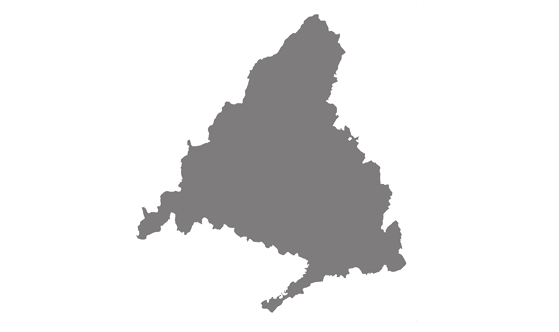


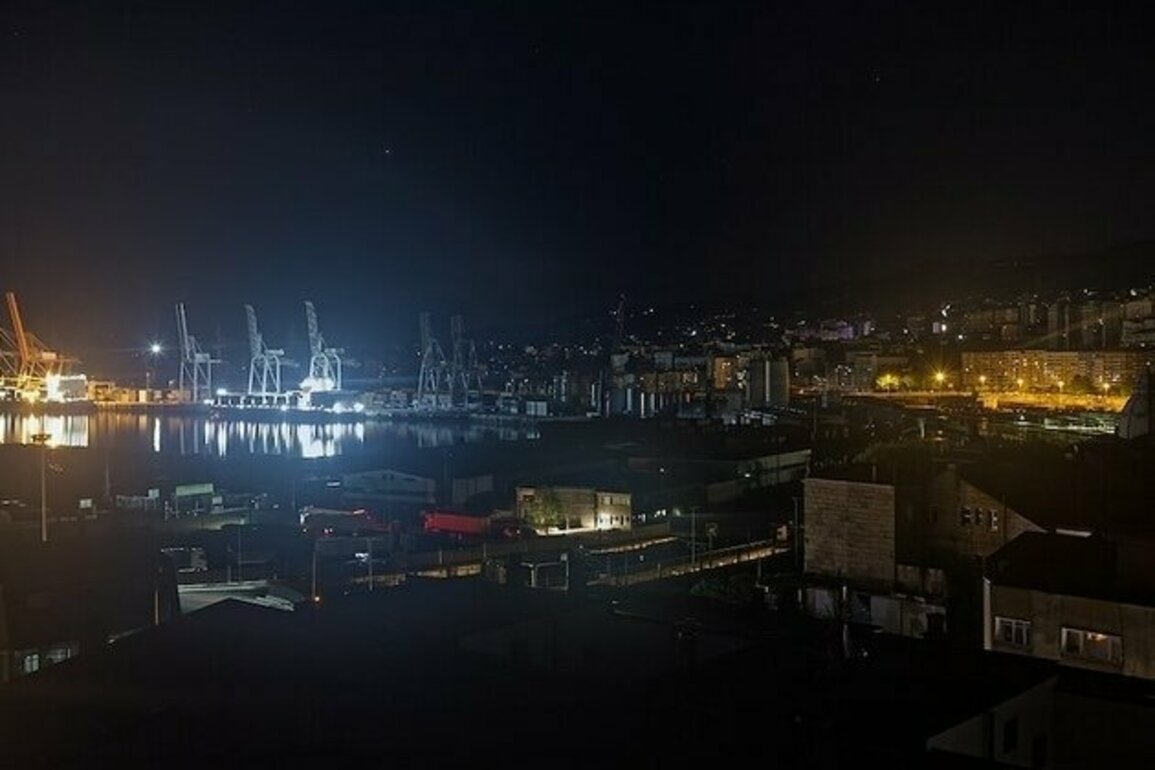
An underdeveloped power grid, not a rapid buildout of solar panels, was the mostly likely cause of the devastating blackout that hit Spain and Portugal April 28, even though renewable energy opponents were quick enough to blame solar.
The loss of power triggered an immediate response from Prime Minister Pedro Sanchez, who insisted the massive outage "was not triggered by excess renewables or a lack of nuclear power" and immediately pledged a national inquiry and grid reform, PV Magazine reported at the time. In the days that followed, insufficient attention and investment in Spain's transmission system emerged as the more obvious culprit, with a possible cameo role for nuclear power plant operators in France who were none too eager to compete with cheaper solar resources on the Spanish grid.
Grid operator Red Electrica de Espana (REE) initially blamed the blackout on a "loss of generation" bigger than the system could absorb, brought on by a mismatch between supply and demand, PV Mag said. Heatmap cited an early Reuters report that solar on the grid dropped from 18,000 to 8,000 megawatts on the Monday afternoon, after "two large-scale losses" of generation in the southwestern part of the country.
But within days, Bloomberg was reporting that the incident spotlighted "potential vulnerabilities" in the Spanish grid "that could offer lessons for other countries" as they electrify and shift to clean energy.
"Much of Spain's grid equipment was built and installed decades ago," Bloomberg wrote. "That means substations-the nodes that connect the different electricity lines-weren't designed to handle the high variability inherent in wind and solar power."
The country's grid investment lagged other European countries, even as its solar capacity more than doubled over the last five years, the news agency added. "Compounding that challenge, Spain is a power 'island', with few of the cross-border cables that help other countries stabilize their networks when things go out of kilter."
That problem may not have been entirely Spain's fault, El Pais said. "Interconnections with the rest of the continent continue to be much fewer than the European Commission recommends, not because Spain isn't interested, but because France has for years resisted expanding them."
Some experts attribute that "to the desire to protect its powerful nuclear fleet from competition from much cheaper Spanish solar," the Madrid-based daily wrote.
The grid crash in the Iberian peninsula was just the latest in a series of incidents from Texas (another well-known electricity island) to Chile, all pointing to the need for US$21.4 trillion in clean grid investments through 2050, Bloomberg said, citing BloombergNEF analysis. The need will increase in Spain as the country boosts its solar capacity another 70% over the next five years, en route to an 81% clean grid by 2030.
"The stronger grids you have, the better possibilities you have to route power in different ways," explained BloombergNEF networks analyst Felicia Aminoff. "If you have strong grids and a bit of spare capacity in power lines and substations, it becomes easier to deal with issues that come from generation."
But Spain has the lowest ratio of grid to clean power investment in Europe, the news story stated, at just 30 per dollar, compared to an average of 70 across most of the continent. That has left the country with just three gigawatts of interconnections to Portugal, France, Andorra, and Morocco, less than 3% of its total capacity-compared to a European Union target of 15% by 2030.
In the wake of the power outage, renewable energy opponents immediately blamed the lack of inertia-something that big turbines bring to the grid, but solar panels do not-for the breakdown. "In a fossil fuel-powered grid, inertia comes from spinning metal-think a gas turbine-and it can give the whole system a little extra boost if another generator drops off the grid," Heatmap explained. "Solar panels, however, don't spin. Instead, they produce direct current that needs to be converted by an inverter into alternating current at the grid's frequency."
"If a power plant goes out, that frequency starts to drop a little bit because there's an imbalance in the power between supply and demand, and inertia provides a little bit of extra power," said University of Colorado electrical and energy engineering professor Bri-Mathias Hodge, a former chief scientist at the U.S. National Renewable Energy Laboratory. Inertia "just gives a little bit more wiggle room in the system, so that if there are big changes, you can sort of ride through them."
But "blackouts happen on grids dominated by fossil fuels," as Eastern Canada and the Northeastern United States found out in 2003, and Texas and Alberta rediscovered in 2021 and 2024. The news story contains a detailed explanation of how grids can evolve to manage frequency regulation issues as the proportion of renewable power increases-and cites battery storage as an important part of the solution.
But that whole discussion produced its own critiques on LinkedIn, where several clean energy and grid experts took issue with blaming solar for the Spanish grid's failure to respond.
"Pundits have piled on to mansplain the need for inertia or frequency control in power systems," wrote Lauri Myllyvirta, co-founder of the Centre for Research on Energy and Clean Air. But "believe it or not, the Spanish grid operator knew about this before you all's condescending posts. They had a fair amount of inertia in the grid from nuclear, hydro, solar thermal, and remaining thermal power, and had invested in synchronous condensers in addition."
Looking at frequency control "as a service that can be provided in many ways is really important because fossil fuel interests always prey on simple minds to push for subsidies to thermal power, rather than a technology neutral approach, as the solution," he added.
Citing International Energy Agency data, climate communicator Ketan Joshi said solar and wind have already been contributing to frequency control in Spain. "If you are curious about why you have never heard about this before," he wrote, "it's because there is an aggressive structural bias towards the technological status quo in politics, media, and professional social media spaces."
The episode also triggered a small wave of secondary discussion on how to keep the power on when the grid fails. The UK's Energy & Climate Intelligence Unit calculated that the average Spanish household could get five days' power by using 60% of the charge in an electric vehicle battery. Rooftop solar owners weren't as fortunate, Bloomberg wrote, since their panels were often connected directly to the grid.
In Australia, RenewEconomy quoted Alex Schoch, head of demand flexibility at the UK's biggest energy retailer, Octopus Energy, who compared the inflexibility in Spain's grid with conditions that triggered South Australia's "system black" crisis in 2016.
"Two blackouts, one root cause," wrote Schoch, who played a major role in lining up the "Tesla big battery" that was built in less than 100 days following the South Australia blackout. "Both grids lacked the tools to recover from sudden shocks."
Schoch and other experts "point out that battery storage might have been able to arrest those frequency excursions, preventing the cascading sequence of events that led to the blackout," RenewEconomy wrote. In South Australia, a grid that received 41% of its power from wind and solar in 2016 averaged 72% in each of the last two years, "and is now heading towards the state government target of 100% net renewables in 2027."
Source: The Energy Mix